
Rudranath Temple | Significance & Yatra Guide | Himtrip
PILGRIMAGES IN UTTARAKHAND
2 min read
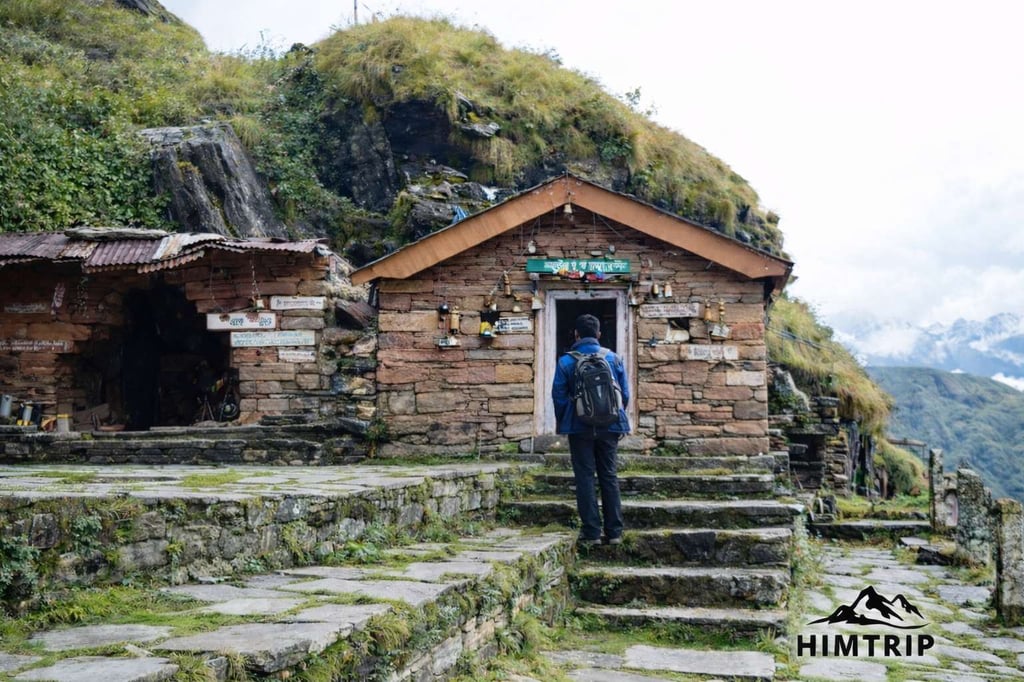
Rudranath – Face of Lord Shiva
Rudranath is one of the five sacred Panch Kedar temples of Lord Shiva and is considered the most remote and spiritually intense among them. Situated at an altitude of approximately 3,600 meters in the Garhwal Himalayas of Uttarakhand, Rudranath is the place where the face of Lord Shiva is worshipped in a natural rock formation.
Unlike Kedarnath or Tungnath, Rudranath is known for its isolation, silence, and raw Himalayan beauty, making it a destination for true spiritual seekers.
About Rudranath Temple
Deity: Lord Shiva (Face – Mukha)
Altitude: ~3,600 m
Circuit: Panch Kedar
Region: Chamoli district, Uttarakhand
Temple Opening: May–June
Temple Closing: Oct–Nov
There is no permanent structure—the shrine is a natural rock face revered as Shiva.
History & Mythology
Rudranath’s origin comes from the Mahabharata legend of the Pandavas.
According to mythology:
After the Kurukshetra war, the Pandavas sought forgiveness from Lord Shiva
Shiva avoided them by transforming into a bull
When discovered, his body disappeared into the earth
His face appeared at Rudranath
Other body parts appeared at:
Kedarnath – hump
Tungnath – arms
Madhyamaheshwar – navel
Kalpeshwar – hair
Together forming the Panch Kedar pilgrimage.
Cultural & Spiritual Significance
Rudranath represents:
Detachment and renunciation
Silence, meditation, and asceticism
A pilgrimage meant for inner transformation, not comfort
Because of its remoteness, Rudranath has traditionally been visited by sages and yogis rather than large crowds.
Rudranath Yatra Routes
There are multiple trekking routes, all demanding:
Sagar Village → Rudranath (≈20 km trek – most popular)
Mandoli → Anasuya Devi → Rudranath
Helang → Urgam Valley → Rudranath
All routes involve multi-day treks through forests and alpine meadows.
Best Time to Visit Rudranath
May to June - Clear trails, moderate weather
July to Aug - Monsoon (not recommended)
Sept to Oct - Best clarity, fewer pilgrims
Nov to April - Temple closed (snow)
Accommodation
Basic guesthouses at Sagar / Mandoli
Camping near meadows en route
No accommodation at the shrine itself
Important Travel Tips
High fitness level required
Attempt only with experienced guides
Carry food, water, and emergency supplies
Weather changes suddenly at altitude
Not recommended for beginners or senior citizens
Rudranath with Himtrip
Himtrip offers:
Guided Rudranath Yatra packages
Full Panch Kedar circuit planning
Experienced mountain staff
Logistics, camping & safety support
FAQs – Rudranath
Q. Is Rudranath the hardest Panch Kedar?
Yes, it is considered the most difficult due to distance and remoteness.
Q. Is Rudranath suitable for senior citizens?
No, due to long treks and lack of facilities.
Q. Can Rudranath be combined with Tungnath?
Yes, in extended Panch Kedar itineraries.
Q. Is there a proper temple at Rudranath?
No, Shiva is worshipped as a natural rock face.
Rudranath PDF Brochure (Download)
👉 Download Rudranath Pilgrimage Guide PDF
Connect on Social
Reach out for your Himalayan adventure trip queries. Lets make it happen!
Have a Query!
© 2026. All rights reserved.