
VALLEY OF FLOWERS Trek – UTTARAKHAND
The Valley of Flowers is a UNESCO World Heritage Site, famous for its monsoon bloom when thousands of Himalayan wildflowers blanket the entire valley in vibrant colors.
UTTARAKHAND TREKS
2 min read
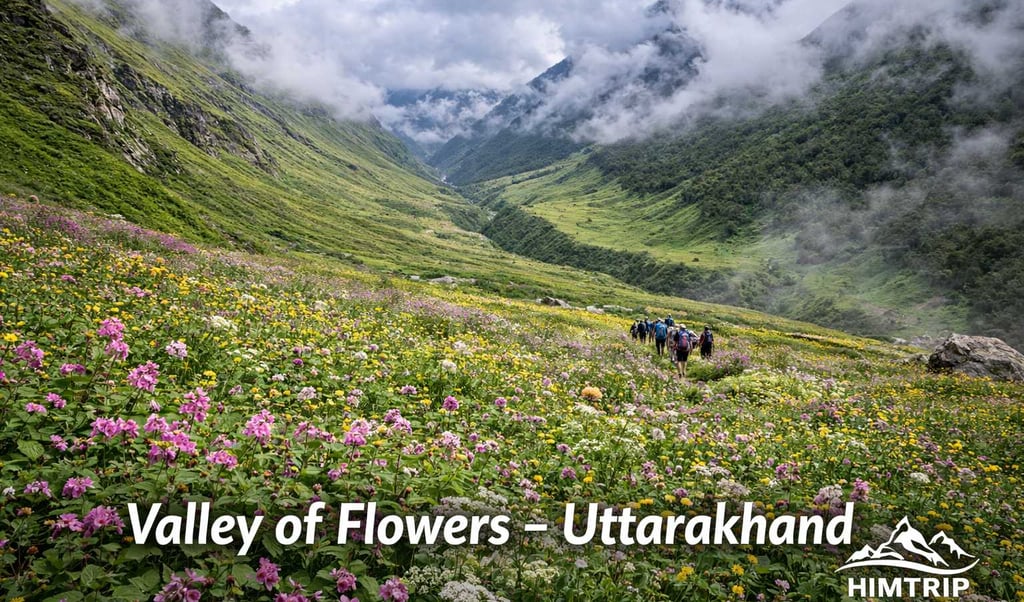
🌸 VALLEY OF FLOWERS TREK – UTTARAKHAND
Region: Chamoli, Nanda Devi Biosphere
Difficulty: Moderate
Duration: 5–6 Days
Max Altitude: ~3,600m
Price From: ₹7,500
⭐ Short Overview
The Valley of Flowers is a UNESCO World Heritage Site, famous for its monsoon bloom when thousands of Himalayan wildflowers blanket the entire valley in vibrant colors. The trek is beginner-friendly in terms of terrain but requires stamina due to long walking days. Ideal for families, photographers, botanists, and first-time trekkers looking for a scenic, non-technical Himalayan experience.
1. Difficulty Breakdown
Overall Difficulty: Moderate
The climb is steady but manageable; the only challenge is distance.
Trail Type
Well-paved path from Govindghat to Ghangaria
Narrow valley trail inside the national park
No technical or exposed sections
Daily Distance
4–12 km per day
Altitude Gain
Govindghat (~1,800m) → Valley (~3,600m)
Fitness Required
Ability to walk 10–12 km in a day
Suitable for fit beginners
Ponies available on request (extra cost)
Who Should Avoid
Those with knee issues (long descents)
Anyone expecting a quiet trail — monsoon season is crowded
2. Full Itinerary (Day-wise)
Day 1: Rishikesh → Govindghat (Drive)
9–10 hour drive via the confluences: Devprayag, Rudraprayag, Karnaprayag.
Overnight stay at Govindghat.
Trek briefing in the evening.
Day 2: Govindghat → Ghangaria (Trek)
10–12 km paved ascent.
Optional pony/helicopter service (subject to weather).
Stay in hotel/guesthouse at Ghangaria.
Day 3: Ghangaria → Valley of Flowers → Ghangaria
Enter the national park gate early morning.
Walk 3–4 km into the core valley.
Explore rare flora: Blue poppy, cobra lily, brahmakamal (near Hemkund).
Return to Ghangaria by evening.
Day 4: Hemkund Sahib (Optional but Recommended)
6 km steep climb to a 4,329m glacial lake.
Visit Hemkund Sahib Gurudwara.
Return to Ghangaria.
This day is optional for those wanting only the valley.
Day 5: Ghangaria → Govindghat → Rishikesh
Descend the same route to Govindghat.
Drive back towards Rishikesh.
Optional Day 6
You can break the return journey with a night stay at Govindghat or Joshimath.
3. Inclusions & Exclusions
Inclusions
Stay at Govindghat & Ghangaria
All meals during trek days
Permits & national park entry
Trek leader + support team
Exclusions
Transport to/from Rishikesh
Pony/helicopter services
Personal gear rental
Meals during road travel
Porter services
4. How to Reach
Nearest Hub: Rishikesh / Haridwar
Route:
Rishikesh → Joshimath → Govindghat → Ghangaria
Transport Options
Shared cabs from Rishikesh
Private taxis
Buses to Joshimath
5. Stay & Food
Stay
Guesthouses at Govindghat & Ghangaria
No camping allowed inside valley
Food
Hot vegetarian meals
Multiple cafés on trail
Packed lunch on valley day
6. Safety & Weather
Safety
Monsoon rains → slippery sections
No camping in the valley
Guides monitor weather window daily
Weather
Jul–Aug: Peak bloom, frequent rain
Sep: Clear skies, end of bloom
Oct–Jun: Valley closed
7. Best Time to Visit
July to August — peak flower bloom
September — clear skies, fewer flowers
8. Packing List
Mandatory
Trekking shoes
Poncho/rain jacket
Warm layers
Sunglasses
Headlamp
Water bottle
Optional
Trekking pole
Power bank
Gaiters (monsoon)
Camera
9. FAQs
Q. Is Valley of Flowers suitable for beginners?
Yes — but long walking days require basic fitness.
Q. When does the valley bloom?
Peak bloom: mid-July to mid-August.
Q. Is Hemkund Sahib compulsory?
No — optional but highly recommended.
Q. Can children do this trek?
Yes, if they can walk 8–10 km.
Ready to explore India’s most beautiful monsoon trek?
Connect on Social
Reach out for your Himalayan adventure trip queries. Lets make it happen!
Have a Query!
© 2026. All rights reserved.